How it works

From first photo to feeling fully supported

Five thoughtful stages. A surgeon considers your case, every practical detail is arranged, and your support continues through the year.

  1. Step 1 · Intake

    Tell us about you

    • Complete a five-minute online assessment
    • Share your hair-loss, health and medication history
    • Start free, with no commitment to treatment
    A man taking guided photographs of his hair at home
  2. Step 2 · Scans

    Show us your hair

    • Upload guided photos of your hairline, crown and donor area
    • Provide recent tests only when clinically requested
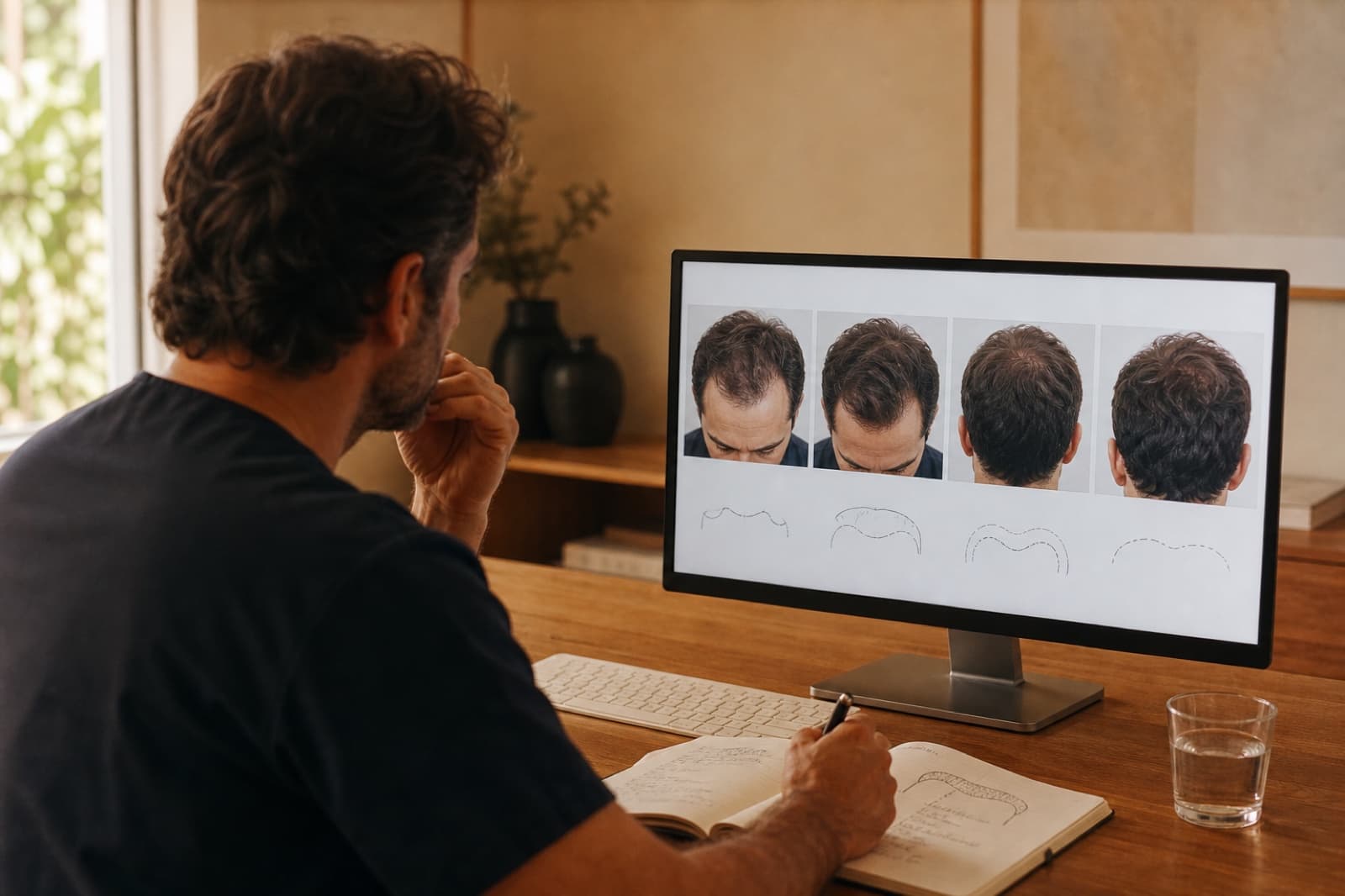
    • A surgeon reviews your pattern and donor capacity
    A surgeon reviewing clinical photographs of a patient’s hair
  3. Step 3 · Plan

    Review your treatment plan

    • See the recommended approach and provisional graft range
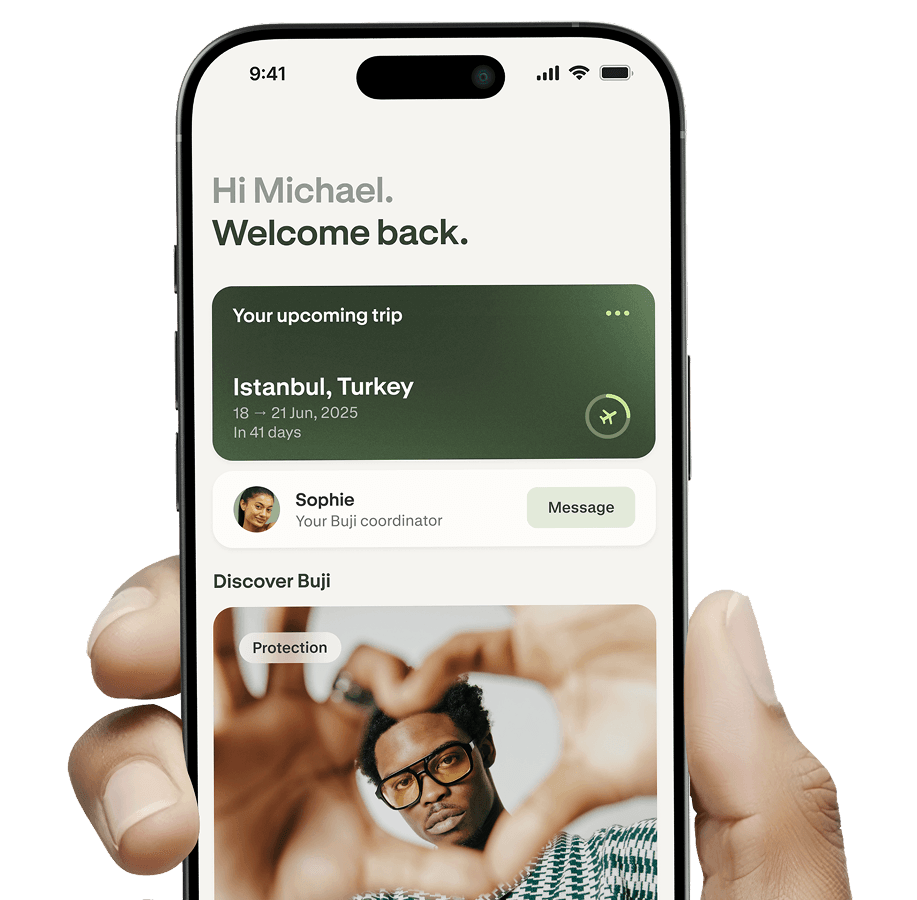
    • Know your surgeon, dates and what is included
    • Review the $6,000 complete price before you reserve
    The Buji app showing an upcoming treatment journey and coordinator
  4. Step 4 · Treatment

    Travel for your treatment

    • Follow a coordinated four-day treatment itinerary
    • Your surgeon treats one Buji patient that day
    • Hotel, transfers and Buji support are included
    A calm treatment room prepared for one hair-transplant patient
  5. Step 5 · Aftercare

    Track your recovery together

    • Follow clear washing, healing and medication instructions
    • Share progress photos through scheduled check-ins
    • Complete your outcome review at twelve months
    A Buji hair patient continuing normal life during recovery
A surgeon reviewing photographs of a patient’s hairline

The plan starts with understanding you

Your donor area, the pattern of loss, your health and the future all matter. A surgeon considers those things before recommending whether treatment is right—and what a natural, responsible plan could look like.

What your surgeon takes into account

Four connected areas shape a responsible recommendation. A single selfie cannot tell the whole story.

Your donor area

  • Density at the back and sides
  • How fine or coarse your hair is
  • How much can safely be taken
  • Scarring from any previous work
  • How the donor area will look after
  • Whether there is enough left for later

Your pattern

  • Where you are actually receding
  • How quickly it is moving
  • Your age and family history
  • Whether the loss has settled
  • A hairline that suits your face
  • What will still look right in twenty years

Why it is happening

  • Male pattern hair loss
  • Medication you are taking
  • Thyroid and iron levels
  • Stress, illness and recovery
  • Tension from how you wear it
  • Scarring conditions of the scalp

Your health

  • How well you heal
  • Diabetes
  • Blood thinners
  • Smoking
  • Transplants you have had before
  • Anything that makes surgery a bad idea

Your treatment trip, already mapped out

A simple four-day journey, coordinated around your consultation, procedure, first wash and recovery.

  1. The day you land

    Your airport transfer takes you to the hotel. Your in-person consultation confirms the plan and hairline before treatment begins.

  2. The day of your procedure

    A full day at the clinic, and you are the only patient your surgeon has. Local anaesthetic, and you are awake throughout.

  3. The day after

    Return to the clinic for your first wash and a calm, in-person walkthrough of your aftercare.

  4. Flying home

    Your airport transfer is arranged. You leave knowing what healing should look like and when we will check in.

Your recovery

Good results take time and patience

Early shedding is expected and growth arrives gradually. Knowing the rhythm beforehand makes recovery feel far less uncertain.

  1. First two weeks

    Scabbing, swelling and redness. It looks worse before it looks like anything.

  2. Weeks two to six

    The transplanted hairs commonly shed. This expected stage can feel unsettling, so your aftercare explains what is normal and when to contact the team.

  3. Months three to five

    New growth starts, fine and patchy. Nothing you would show anyone yet.

  4. Months six to nine

    It starts looking like hair. Thickness and texture keep changing.

  5. Twelve months

    This is when you judge it, and when we review it with you. Not before.

Results vary from person to person, and no particular cosmetic result is promised.

Questions worth asking

Is it really $6,000?
Yes. Your procedure, hotel, local transfers, aftercare and eligible protection are included in the written $6,000 plan. Flights are booked separately. A refundable $95 deposit holds your date and comes off the total. If the clinical review finds that treatment is not right for you, the deposit is returned.
Why is one patient a day such a big deal?
Because attention matters. Some clinics schedule several procedures around the same surgeon. Buji reserves the day for one patient, so the treating team is not balancing your care with another Buji procedure in the next room.
Does Buji employ the surgeon?
No. The independent clinic employs the surgeon and technicians, holds the licence and carries clinical responsibility. Buji reserves the day through the clinic, checks the standards and coordinates everything around your treatment.
Will I definitely get the result I want?
No responsible provider can guarantee a particular cosmetic result. Outcomes vary with your donor area, pattern and healing. What Buji can provide is a proper surgeon review first, clear expectations and defined remedies for eligible plans under BujiCover.
What if something goes wrong?
Eligible plans include BujiCover, which is two separate things. Medical travel insurance covers your insured trip. Separately, the twelve-month Buji Outcomes Guarantee is a contractual guarantee from Buji Technologies Limited, with defined remedies. It is not an insurance product, and we confirm the exact terms in writing before you book.
How long do I need off work?
Most people take about a week. You can usually work from home sooner than you can face a meeting room — the redness and swelling are the reason, not the discomfort.
When will I see my hair?
The meaningful review is around twelve months. Transplanted hairs commonly shed early, then growth begins gradually and continues maturing through the year. Your plan includes check-ins and a twelve-month review.
What if I am too young, or still losing hair?
Then a good surgeon should tell you to wait, and ours will. Transplanting into a pattern that is still moving is how people end up with a hairline that stops making sense a decade later. If waiting or medication is the better call, that is the advice you will get.
A man laughing, lit warmly against a dark background

Start with a plan made for your hair

Share a few guided photos and tell us what matters to you. A surgeon reviews your case and we explain the next step. Free to start, with no commitment.

Nothing on this page is a diagnosis, a quotation or a promise of a particular result. Hair-transplant outcomes vary from person to person.

Treatment is carried out by independent partner clinics that Buji vets. Those clinics employ the surgical team, hold the relevant licence and carry clinical responsibility for your care. Whether treatment is appropriate is a clinical decision made after an assessment, and your plan is confirmed after a final clinical review.

BujiCover is two separate things. Medical travel insurance applies to your insured trip. The twelve-month Buji Outcomes Guarantee is a separate contractual guarantee provided by Buji Technologies Limited and is not an insurance product. Eligibility, terms, exclusions and remedies for both are confirmed in writing before you book. If you need urgent medical attention, call 111 or 999.

How a Buji Hair Transplant Works, Step by Step | Buji