How it works

From a few photos to twelve months later

Five stages, and the first two cost you nothing. Here is exactly what happens, including the parts nobody enjoys explaining.

What actually happens

  1. 1

    Tell us about your hair

    Send a few photos and answer a short set of questions. It takes about five minutes, it costs nothing, and nobody rings you the moment you finish.

  2. 2

    A surgeon reviews it

    Someone qualified looks at your donor area, your pattern and your history. If a transplant is the wrong answer for you — or the wrong answer right now — that is what you will be told.

  3. 3

    You get one price

    £3,999, with everything in it, written down before you commit to anything. £95 holds your date, it is refundable, and it comes off your total.

  4. 4

    You fly out

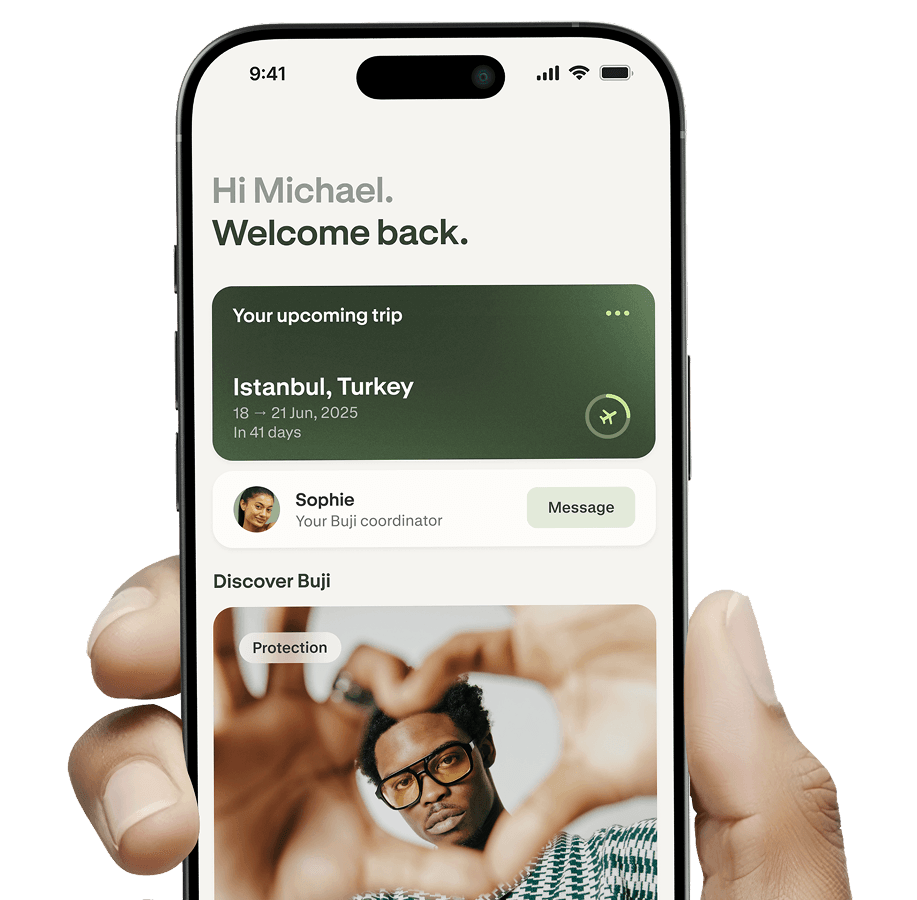
    We collect you at the airport and take you to your hotel. The next morning you are the only patient your surgeon has that day. Someone from Buji is reachable the whole time you are away.

  5. 5

    You come home

    We check in while your hair does the slow part, and there is a review at twelve months. Eligible plans have BujiCover behind them the whole way.

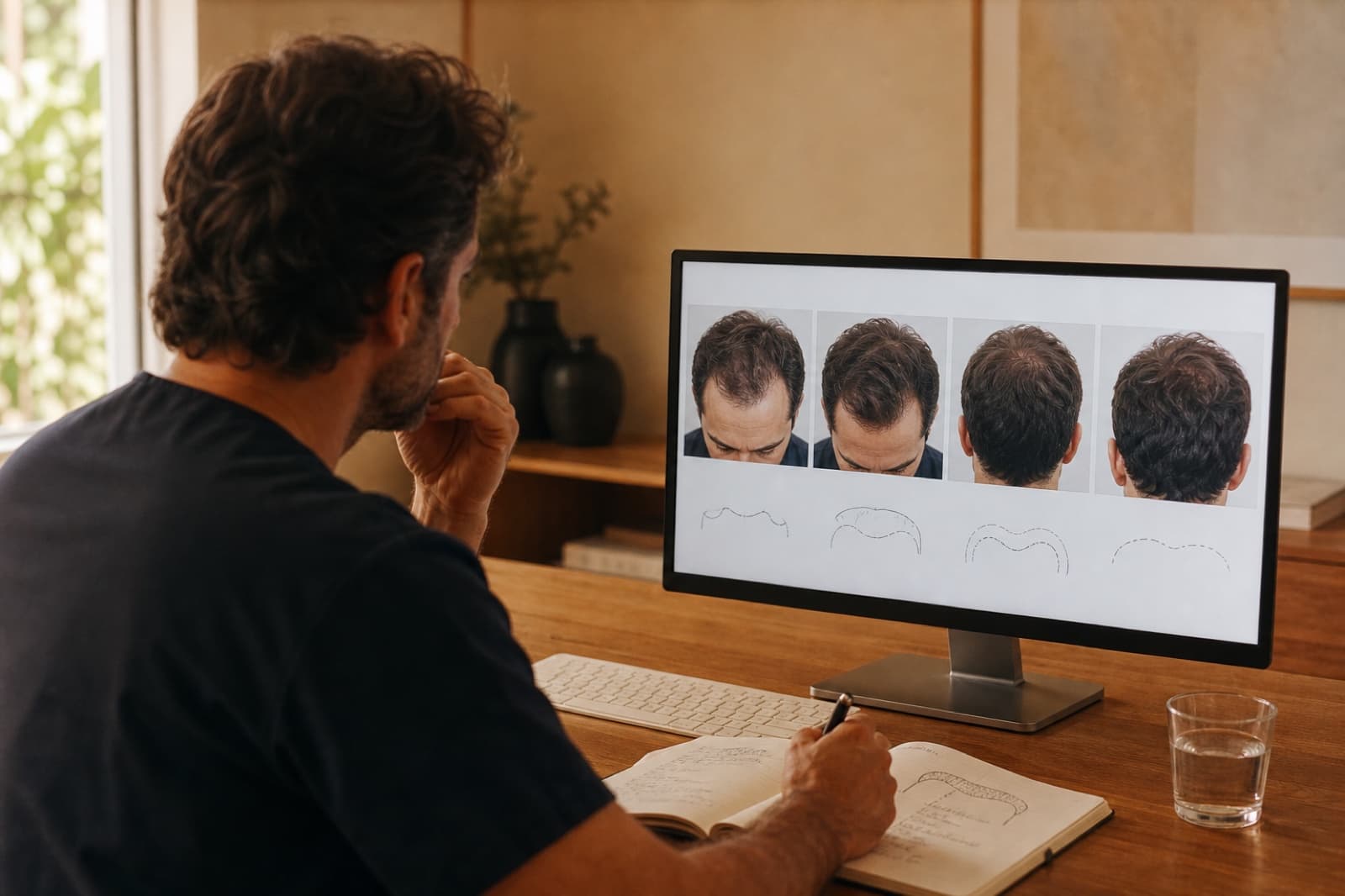
A surgeon reviewing photographs of a patient’s hairline

The assessment is the whole point

A graft count is not a plan. Before anyone gives you a number, a surgeon looks at whether your donor area can support what you want, whether your loss has settled, and whether a hairline drawn today will still make sense in twenty years.

What a surgeon reviews

Four things decide whether a transplant is right for you, and none of them are visible in a single selfie.

Your donor area

  • Density at the back and sides
  • How fine or coarse your hair is
  • How much can safely be taken
  • Scarring from any previous work
  • How the donor area will look after
  • Whether there is enough left for later

Your pattern

  • Where you are actually receding
  • How quickly it is moving
  • Your age and family history
  • Whether the loss has settled
  • A hairline that suits your face
  • What will still look right in twenty years

Why it is happening

  • Male pattern hair loss
  • Medication you are taking
  • Thyroid and iron levels
  • Stress, illness and recovery
  • Tension from how you wear it
  • Scarring conditions of the scalp

Your health

  • How well you heal
  • Diabetes
  • Blood thinners
  • Smoking
  • Transplants you have had before
  • Anything that makes surgery a bad idea

Your trip, day by day

Four days, and you are only in a clinic for two of them.

  1. The day you land

    Someone meets you at the airport and takes you to your hotel. You have a consultation, your hairline gets drawn and agreed, and you get an early night.

  2. The day of your procedure

    A full day at the clinic, and you are the only patient your surgeon has. Local anaesthetic, and you are awake throughout.

  3. The day after

    Back to the clinic for your first wash and your aftercare instructions, done in person rather than handed over as a leaflet.

  4. Flying home

    A transfer back to the airport. You will be swollen and tired, and that is normal.

The honest bit

What growth really looks like

Most people think it has failed at about week three. It has not. This is the timeline nobody selling you a package tends to lead with.

  1. First two weeks

    Scabbing, swelling and redness. It looks worse before it looks like anything.

  2. Weeks two to six

    The transplanted hairs fall out. This is meant to happen, it is not the graft failing, and it is the point at which most people quietly panic.

  3. Months three to five

    New growth starts, fine and patchy. Nothing you would show anyone yet.

  4. Months six to nine

    It starts looking like hair. Thickness and texture keep changing.

  5. Twelve months

    This is when you judge it, and when we review it with you. Not before.

Results vary from person to person, and no particular cosmetic result is promised.

Questions people actually ask

Is it really £3,999?
Yes — one price, with your procedure, your hotel, your transfers, your aftercare and your protection in it. £95 holds your date while our UK clinical team reviews your case; it is refundable and it comes off your total. Your plan is confirmed after a final clinical review, and if a surgeon decides a transplant is not right for you, you are not out of pocket.
Why is one patient a day such a big deal?
Because the alternative is a production line. It is common for clinics to run several procedures at the same time, with technicians doing most of the hands-on work while a surgeon moves between rooms. We reserve a surgeon’s whole day for one patient, so nobody involved in your procedure is being hurried towards someone else.
Does Buji employ the surgeon?
No, and we are careful about this. The clinic employs the surgeon and the technicians, holds the licence and carries medical responsibility for your care. What Buji does is reserve that surgeon’s time for you, set the standards we expect, audit them, and look after everything around the procedure.
Will I definitely get the result I want?
Nobody can honestly promise you that, and we will not. Hair-transplant results vary, and they depend on your donor area, your pattern and how you heal. What we can promise is that a surgeon assesses you properly first, that you are told honestly if you are not a good candidate, and that eligible plans carry defined remedies through BujiCover.
What if something goes wrong?
Eligible plans include BujiCover, which is two separate things. Medical travel insurance covers your insured trip. Separately, the twelve-month Buji Outcomes Guarantee is a contractual guarantee from Buji Technologies Limited, with defined remedies — including corrective treatment in the UK where that is the approved remedy. It is not an insurance product, and we confirm the exact terms in writing before you book.
How long do I need off work?
Most people take about a week. You can usually work from home sooner than you can face a meeting room — the redness and swelling are the reason, not the discomfort.
When will I see my hair?
Properly, at around twelve months. The transplanted hairs shed within the first six weeks, which alarms people who were not warned. Growth starts around three to four months and keeps improving through the year. We review it with you at twelve months.
What if I am too young, or still losing hair?
Then a good surgeon should tell you to wait, and ours will. Transplanting into a pattern that is still moving is how people end up with a hairline that stops making sense a decade later. If waiting or medication is the better call, that is the advice you will get.
A man laughing, lit warmly against a dark background

Find out where you actually stand

Five minutes, a few photos, and a surgeon tells you honestly whether this is right for you. It costs nothing and you are not committing to anything.

Nothing on this page is a diagnosis, a quotation or a promise of a particular result. Hair-transplant outcomes vary from person to person.

Treatment is carried out by independent partner clinics that Buji vets. Those clinics employ the surgical team, hold the relevant licence and carry clinical responsibility for your care. Whether treatment is appropriate is a clinical decision made after an assessment, and your plan is confirmed after a final clinical review.

BujiCover is two separate things. Medical travel insurance applies to your insured trip. The twelve-month Buji Outcomes Guarantee is a separate contractual guarantee provided by Buji Technologies Limited and is not an insurance product. Eligibility, terms, exclusions and remedies for both are confirmed in writing before you book. If you need urgent medical attention, call 111 or 999.